-
 Welcome To Karnataka State Bar Council
 -
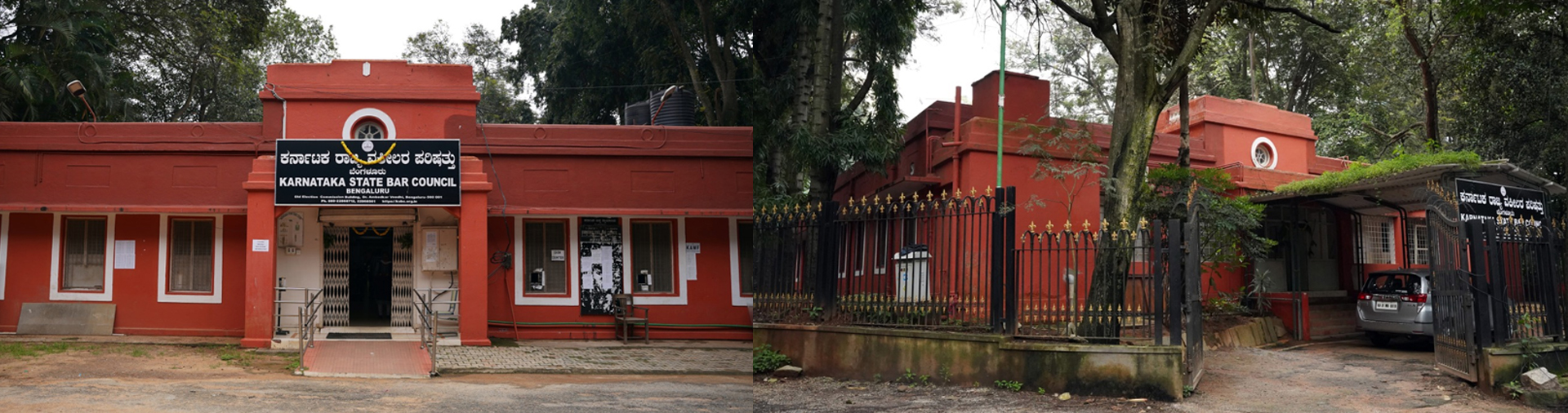 Welcome to Karnataka State Bar Council
 -
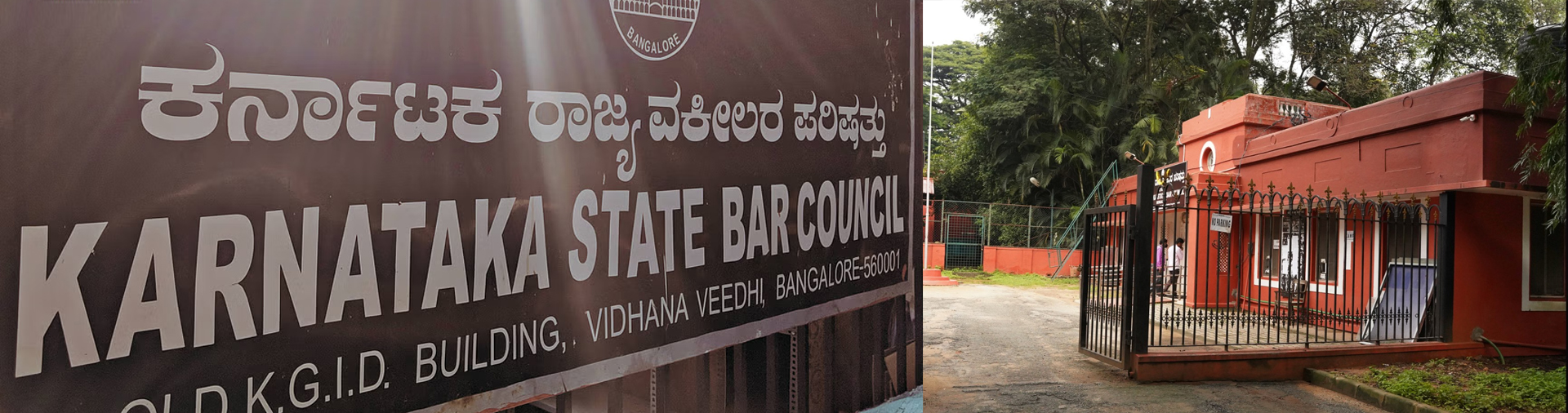 Welcome to Karnataka State Bar Council
- Dr. Ambedkar Veedhi, Bengaluru - 560 001
- 080-22868712 / 080-22868561
- kar_barcouncil@yahoo.com


Welcome To Karnataka State Bar Council
Legal Practitioners Act, 1879 came into force with effect from 1st January, 1880. A Person who is qualified to be pleader / vakil / muktas has to appear for examination and after obtaining the certificate he / she may apply under Sec. 7 of the Legal Practitioners Act and Register their name in any Court or Revenue Office situated within the local limits of the Appellate Jurisdiction of the High Court.
As Per Sec. 11 of this Act, the High Court may frame the rules declaring what shall be deemed to be the functions, powers and duties of pleaders / vakils / muktas.
As per Sec. 13 of this Act, the High Court has Disciplinary control over Pleaders / Vakils / muktas by suspending / dismissal / by withdrawing the certificate granted by it.
As per the Act, 38 of 1926, the Indian Bar Council Act 1926 came into force with effect from 9.9.1926. As per Sec. 8 of Indian Bar Council Act a person may enroll as an advocate in the High Court. As per Sec. 4(1), every Bar Council shall consist of 15 Members, one shall be the Advocate General, 4 shall be persons nominated by High Court of whom not more than 2 may be judges of High Court and 10 shall be elected by the Advocates who are practicing at High Court.
Read more...
The List of Advocates who have contributed the amount to the following Account for the Financial Assistance to the needy Advocates
Current Affairs for KSBC

- Pay attention to the pattern and syllabus: UPSC has a vast syllabus so it is important for you to understand exactly how much you need to study for Prelims and Mains. The types of questions are entirely different for Prelims and Mains and so is the strategy. Joining the IAS Online Coaching with Career Launcher should help you with regards to optimizing the time you are spending.
- Build your foundation: The first step in UPSC preparation is strengthening your foundation. It is important to go through the NCERT books from Class 6 to Class 12 to have basic conceptual clarity. In order to help you with this, Career Launcher has launched an NCERT Program, which falls under the IAS Online Coaching umbrella. It will take you through the vast amount of material quickly and efficiently.
- Give adequate importance to practice: Knowledge is one thing but it is important for you to demonstrate the same in the actual exam as well. In order to do this, you need to ensure that your exam strategy and answer-writing skills are at par. This is the reason that our comprehensive IAS Online Coaching Programs also include mocks and the test series that will keep you at the top of your IAS preparation.
Latest News
- IAS has a vast syllabus so it is important for you to understand exactly how much you need to study for Prelims and Mains.
- IAS has a vast syllabus so it is important for you to understand exactly how much you need to study for Prelims and Mains.
- IAS has a vast syllabus so it is important for you to understand exactly how much you need to study for Prelims and Mains.
Karnataka State Bar Council Notifications
Our focus is on business outcomes, offering security, scalability and availability ?
Karnataka State Bar Council is a privately-owned, certified national business and technology consulting firm.
Our focus is on business outcomes, offering security, scalability and availability ?
Karnataka State Bar Council is a privately-owned, certified national business and technology consulting firm.
Read more...
Frequently asked questions
Anim pariatur cliche reprehenderit, enim eiusmod high life accusamus terry richardson ad squid. 3 wolf moon officia aute, non cupidatat skateboard dolor brunch. Food truck quinoa nesciunt laborum eiusmod. Brunch 3 wolf moon tempor, sunt aliqua put a bird on it squid single-origin coffee nulla assumenda shoreditch et. Nihil anim keffiyeh helvetica, craft beer labore wes anderson cred nesciunt sapiente ea proident. Ad vegan excepteur butcher vice lomo. Leggings occaecat craft beer farm-to-table, raw denim aesthetic synth nesciunt you probably haven't heard of them accusamus labore sustainable VHS.
Anim pariatur cliche reprehenderit, enim eiusmod high life accusamus terry richardson ad squid. 3 wolf moon officia aute, non cupidatat skateboard dolor brunch. Food truck quinoa nesciunt laborum eiusmod. Brunch 3 wolf moon tempor, sunt aliqua put a bird on it squid single-origin coffee nulla assumenda shoreditch et. Nihil anim keffiyeh helvetica, craft beer labore wes anderson cred nesciunt sapiente ea proident. Ad vegan excepteur butcher vice lomo. Leggings occaecat craft beer farm-to-table, raw denim aesthetic synth nesciunt you probably haven't heard of them accusamus labore sustainable VHS.
Anim pariatur cliche reprehenderit, enim eiusmod high life accusamus terry richardson ad squid. 3 wolf moon officia aute, non cupidatat skateboard dolor brunch. Food truck quinoa nesciunt laborum eiusmod. Brunch 3 wolf moon tempor, sunt aliqua put a bird on it squid single-origin coffee nulla assumenda shoreditch et. Nihil anim keffiyeh helvetica, craft beer labore wes anderson cred nesciunt sapiente ea proident. Ad vegan excepteur butcher vice lomo. Leggings occaecat craft beer farm-to-table, raw denim aesthetic synth nesciunt you probably haven't heard of them accusamus labore sustainable VHS.